There’s a moment in a recent therapy session I can’t stop thinking about. A client looked lovingly at her partner and said, only half-jokingly, “You didn’t hug me this morning, but it’s fine—I had my weighted blanket.” We all laughed. The weighted blanket: warm, reliable, non-demanding. And let’s be honest—sometimes, more emotionally available than a spouse during a stressful week.
It’s no secret that emotional disconnection can creep into long-term relationships. Add kids, deadlines, laundry, and career pivots—and suddenly, the intentional touches that once came so easily now require effort. The 20-second hug becomes a casualty of morning chaos. Emotional presence gives way to transactional survival. And in that gap, something surprising happens: people start turning to objects for what they used to get from each other.
Enter: the weighted blanket.
Why the Weighted Blanket Works
Weighted blankets aren’t just cozy—they’re backed by science. Studies show they increase serotonin and melatonin while decreasing cortisol, effectively calming the nervous system. It’s no wonder they’re often used for anxiety, PTSD, and sensory integration issues.
But what’s even more fascinating is what they symbolically replace: the human act of co-regulation.
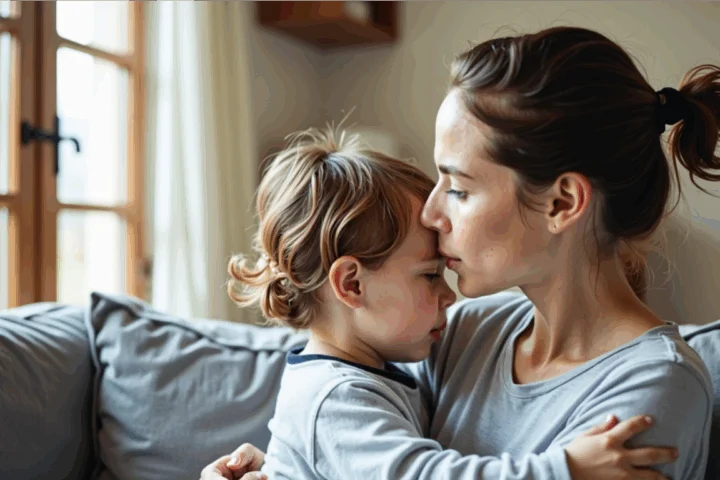
When a partner offers a hug, holds your hand, or simply rests a hand on your back during a hard moment, your nervous system receives a powerful message: you are safe. Weighted blankets simulate that feeling. They don’t nag, withdraw, judge, or forget to say “I love you.” They just show up—exactly how we wish people sometimes would.
What This Shift Is Really About
When a partner turns toward a blanket (or a dog, or Netflix, or social media) instead of their person, it’s easy to interpret that as rejection. But often, it’s not a betrayal—it’s a band-aid. The body is still looking for safety. And when that need goes unmet relationally, it seeks substitutes.
For the partner doing the turning-away, it may be a quiet protest: “I’m tired of initiating. I want to be chosen for once.”
For the partner witnessing it, it may bring up feelings of abandonment or replacement.
And yet, as a therapist, I don’t necessarily see this as a failure. I see it as an invitation.
The Invitation: A Soft Return
What if we didn’t villainize the weighted blanket, but listened to it?
That silent swaddle might be saying:
-
“I need to feel grounded again.”
-
“I’m tired of performing for connection.”
-
“I miss being held, but I’m afraid to ask.”
This isn’t a problem to be fixed overnight—it’s a moment to be honored. A flag that says: Let’s talk about what we’re missing. And maybe… let’s laugh about it, too.
One couple I work with now jokingly refers to their respective blankets as “Tom” and “Harry.” (“Dick” is still on backorder.) They’ve even made a pact: if one of them reaches for their blanket at night, the other checks in. No shame, just curiosity. “Do you want to be alone with Tom, or is this a moment where I can show up instead?”
Reconnection Doesn’t Have to Be Dramatic
Here’s the beauty of all this: your nervous system doesn’t need a five-day couple’s retreat or candlelit monologues to feel safe. It often just needs:
Those tiny rituals, practiced consistently, can begin to outshine even the softest, gravity-filled blanket. The key is intentionality. Not perfection.
If You’re in a “Tom the Blanket” Phase Right Now…
It’s okay. Really. It means your body is asking for something: predictability, warmth, comfort, containment. You’re not broken, and your relationship isn’t doomed.
But maybe it’s time to ask—gently, without shame:
“What would it take for me to reach for you again, instead of the blanket?”
Or:
“How can I make myself more huggable, more reachable, more safe to come home to?”
Connection isn’t a given. It’s a rhythm. And sometimes, it starts with a weighted blanket… but it doesn’t have to end there.
Want to reconnect with your partner, but not sure where to start?
Try the 20-Second Hug Challenge—a simple daily ritual to rebuild co-regulation and emotional trust. No grand gestures, just 20 seconds of mutual presence. Bonus: your kids will love being the “hug referees.”
Because sometimes, the fastest way back to each other…
is slower than you think.
Helping couples find their way back—one weighted blanket at a time.