
By Dr. Katherine Jewett, PsyD, LMFT | Time to Thrive Therapy
A family invitation arrives while you are in the middle of something else. You know the host is waiting. You also know your partner may have a different idea about the day. It is tempting to say yes now and work out the details later, or to delay until the silence becomes its own uncomfortable answer.
If Thanksgiving invitations are arriving, this may feel particularly familiar. The same question can arise around birthdays, religious celebrations, reunions, or an ordinary Sunday meal: How do we respond when an invitation involves more than one person's time?
You can acknowledge the invitation while giving yourselves time to talk: “Thank you for inviting us. I’ll check with Alex and get back to you Thursday.” Then make time for that conversation before Thursday, so neither your partner nor the host is left waiting.
Read what is actually being asked
An invitation can carry several assumed commitments. Are you being invited to attend, stay overnight, bring food, help host, or remain available for the whole weekend? Before debating whether to say yes, separate the stated request from the parts you are imagining.
You might discover that the invitation is simply dinner and that the overnight stay is optional. Or the host may be relying on an answer about cooking, in which case “We will let you know” needs a date.
Ask for missing information when it affects the decision. “Thank you for inviting us. What time are you hoping to eat, and when do you need a firm answer?” An information request is not an acceptance. Avoid wording that gives the host reason to count on you before you have decided.
Before answering a family invitation, hear each person's preference
Before proposing a compromise, ask what each person wants. One of you may be excited to go. The other may want a shorter commitment, a separate plan, or no attendance this time.
Try asking, “If we were not trying to guess everyone else's reaction, what would you prefer?” Then include real responsibilities and constraints. A preference is part of the discussion, not its only consideration.
The Centre for Clinical Interventions distinguishes clear, respectful self-expression from trying to guarantee a particular response. [1] Here, that means making room for an honest answer before treating agreement as inevitable.
Listen for what you mean by “we should go.” If you want to see your family, say that. If you are worried about your mother cooking alone, explain that concern. Your partner may respond differently to “I’d really like you there” than to “I’m worried about who will help with dinner.” You can work on the actual concern once it is spoken.
If the invitation carries a familiar pressure to agree, family expectations and personal limits may be part of what you need to discuss.
Consider more than a joint yes or no
Sometimes both adults want to attend and can make it work. Sometimes neither does. When your preferences differ, check whether there are genuinely workable options beyond either person surrendering the entire decision.
One adult might attend while the other declines. You might accept the meal without the overnight stay, or choose a different occasion to see the family. These are possibilities, not automatic solutions. They still need to fit shared responsibilities and the actual invitation.
If an option relies on childcare, care for another person, money, or someone else's labor, do not count it as available until that part is agreed. “You can stay home” may sound flexible while quietly assigning the other person every responsibility for the evening.
I would want both of you to understand the full commitment you are accepting, including the part that is less visible in the invitation.
Decide who will reply and what they can say
Once you have an answer, choose who will communicate it. Agree on the essential message rather than making one person improvise under family pressure.
“Thank you for including us. I can come for dinner. Alex will not be joining this time. Please plan for one.”
You do not need to disclose a partner's private reasons to make an answer valid. Avoid using them as the explanation for your own choice: “I wanted to come, but Alex won't let me” creates a different conversation and may misrepresent the decision.
If you have not agreed, say so without making a promise: “We are still checking what we can commit to. We will give you a firm answer by Thursday.” Then choose a time to talk before Thursday. The reply date should be something you can actually meet.
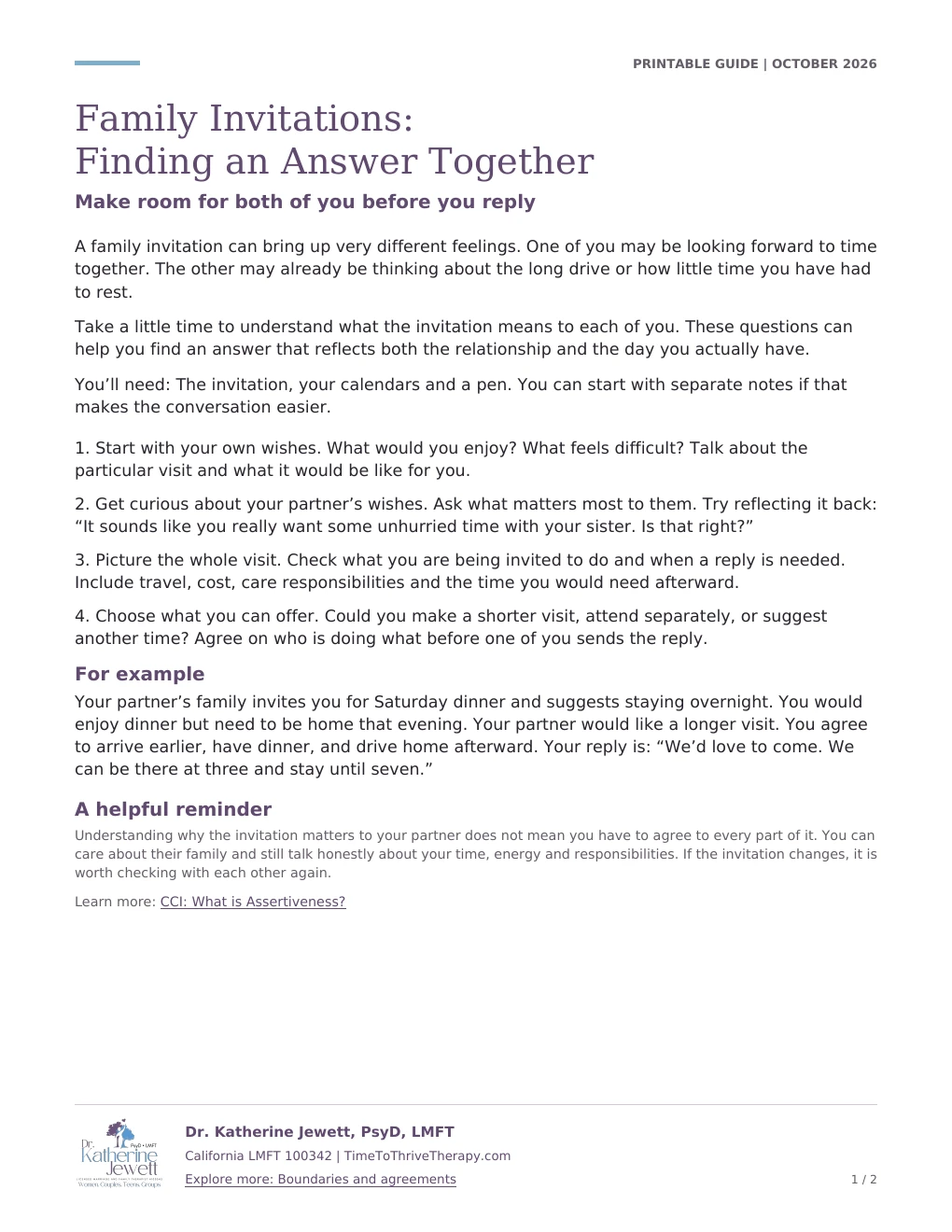
FREE PRINTABLE GUIDE
Family Invitations: Finding an Answer Together
Take a little time to understand what the invitation means to each of you. These questions can help you find an answer that reflects both the relationship and the day you actually have.
A two-page printable guide. You’ll need: The invitation, your calendars and a pen. You can start with separate notes if that makes the conversation easier.
Prepare for a follow-up without rehearsing a fight
A host may be disappointed or ask whether the plan can change. You can acknowledge the invitation's importance without reopening an answer automatically.
“I know you hoped we would both be there. This is what we can manage this time.” If you genuinely want to offer another visit, say what you can offer. Do not add an alternative merely to make a no less uncomfortable.
If someone asks, “But why isn’t Alex coming?” you could say, “I’ll let Alex tell you anything they want to share. I’m looking forward to seeing you at dinner.” If that last part is not true for you, leave it out. You can give a clear attendance answer without explaining your partner’s private reasons.
A family member's disappointment does not by itself make your plan wrong. It may still be worth considering a practical effect you overlooked, such as a contribution already promised. You can correct that without treating every request for more explanation as a requirement to provide it.
Keep the answer connected to your agreement
If the host changes the invitation materially, check with each other before accepting the new version. Agreement to dinner is not agreement to a weekend. If you misspoke, correct the answer promptly rather than letting someone else build plans around it.
The wider importance of following through on a shared agreement applies to what you tell the host as well as what you decide together.
Where saying no brings intimidation, threats, or retaliation, seek confidential individual support rather than treating the situation as ordinary invitation planning. [2]
Before replying, try reading the message to each other: “I’ll be there for dinner, and Alex won’t be joining.” Does that match what you each decided? If one person says, “I only agreed to lunch,” sort that out before sending. A brief check now can prevent both of you having to untangle a promise later.
This article offers general education, not individualized mental health care. All situations and dialogue are invented illustrations, not client stories.
Sources
- Source 2: Create Your Personal Safety Plan
More support for calm and connection