By Dr. Katherine Jewett, PsyD, LMFT | Time to Thrive Therapy
You reach for the familiar recipe and notice whose handwriting is on the card. Or someone asks what time dinner will be, and you realize you have been avoiding that decision altogether.
A holiday after a death can bring very specific questions. Do you want to make the usual meal? Visit the same place? Say the person's name at the table? Would staying home feel welcome, lonely, or impossible to predict?
I wouldn't want to decide what a meaningful holiday should look like for you. I would want to understand which parts you are drawn toward, which feel too demanding, and what support would help you make a choice.
These questions can matter in the first year and long afterward. NHS guidance describes grief as an experience that affects people differently and can bring unexpected feelings. [1] The calendar does not tell us what you ought to be ready for.
Look at one tradition at a time
“Are we doing the holiday?” may feel too large to answer. Separate the day into the actual things you might do: prepare food, travel, attend a service, exchange gifts, gather with particular people, or spend part of the day alone.
For each, ask what it means to you now. A recipe may feel like a welcome connection. The work of preparing it for twenty people may feel unmanageable. Those are separate pieces of the tradition, and you can consider them separately.
Perhaps you want the food but would rather someone else make it. Perhaps you want to visit the place for a short time. Perhaps you do not want that activity this year. You can make a choice about one part without deciding the entire day at once.
Choose what to keep, change, or leave for now
Start with the part you have the clearest feeling about. If you want the familiar soup but cannot face hosting, who might make it or share a small meal with you? If even that feels like too much, you can leave the recipe for another day. You do not have to design a whole holiday before answering one invitation.
“I want to make her soup. I don't want to host the full dinner. I might invite one friend over.”
“I want to go to the gathering, but I don't want to help decorate beforehand.”
“I'd like an ordinary day this year, with a walk if I feel up to it.”
These are choices about how to spend time under changed circumstances. They do not measure the importance of the person who died. If keeping or skipping something feels disloyal, I'd be curious about the meaning you have attached to that decision. Whose expectations are you carrying, and which are your own?
Make remembrance optional and specific
You might want to put a photograph on the table or listen privately to a song that reminds you of the person. Consider what draws you to the idea and whether you want company for it. If a planned remembrance feels like one more thing to get through, you can choose not to arrange one.
If you want others involved, be specific about the invitation: “I'd like to share one memory before we eat. Would you like to join, or would you rather listen?” Do not assume everyone wants to speak publicly or be photographed.
You can also reserve something for yourself. Reading an old letter alone does not need to become a family event or a social media post. Consider whether you want to keep the experience private before you invite anyone into it.
Arrange the practical support you might need
A flexible intention becomes more usable when you know how it will work. If you might leave early, can you arrange transport that does not require someone else to leave too? If you are hosting briefly, who will help clear up? If you want company, who has actually agreed to be available?
You could tell a trusted person, “I plan to come for lunch. I may leave afterward, and I'd appreciate not having to explain that in front of everyone.”
Or: “I'm spending the morning at home. Could we have a short call later?”
Ask rather than assuming. The other person may have limits too, and knowing them gives you a more realistic plan. You can make a second option if the first arrangement is unavailable.
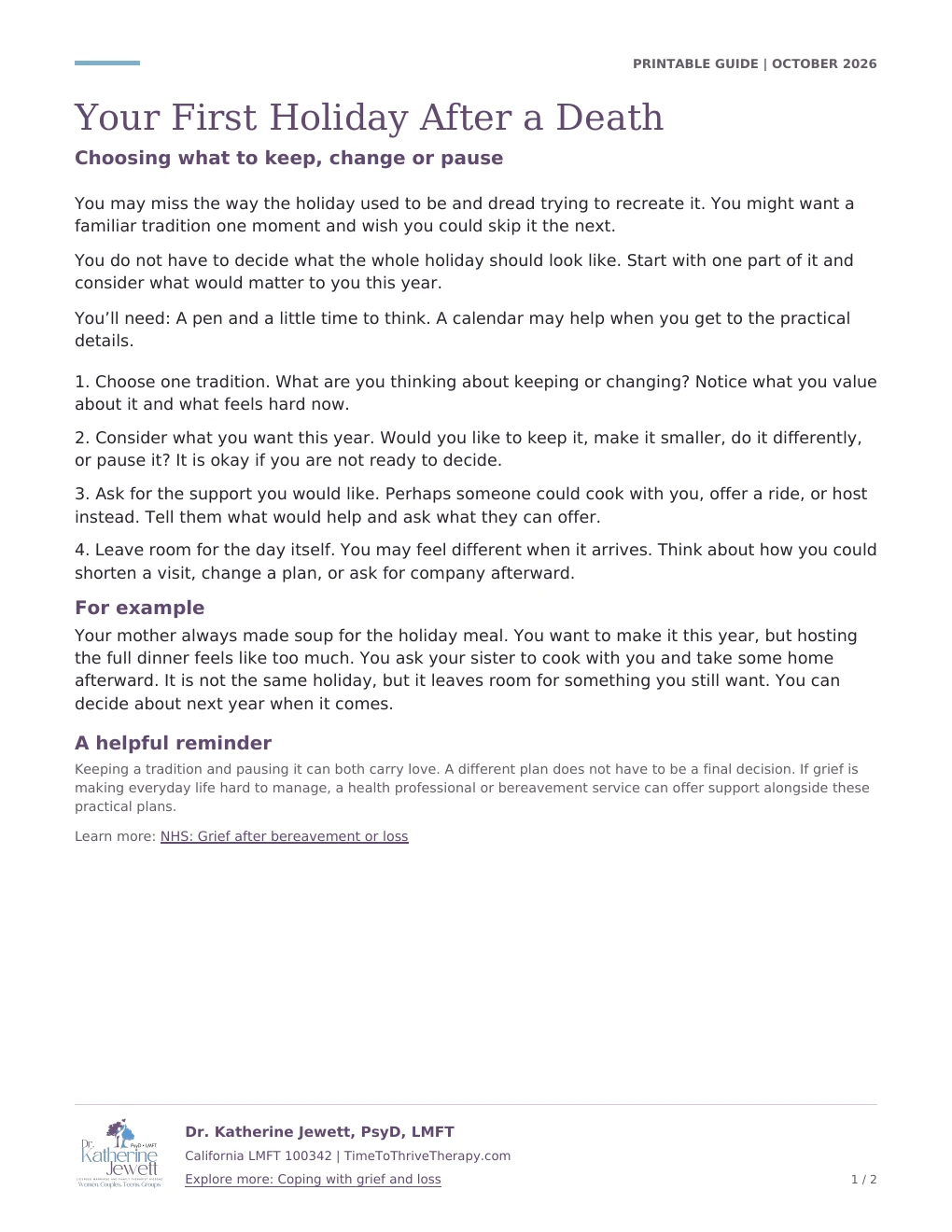
FREE PRINTABLE GUIDE
Your First Holiday After a Death
You do not have to decide what the whole holiday should look like. Start with one part of it and consider what would matter to you this year.
A two-page printable guide. You’ll need: A pen and a little time to think. A calendar may help when you get to the practical details.
Leave room to feel differently when the day comes
You may choose something carefully and still find it harder than expected. You may also laugh, enjoy the meal, or feel relieved to be somewhere different. An emotional moment does not require you to explain the whole meaning of the day.
If survivor guilt after a loss is part of your experience, that narrower concern has its own guide; it is not something every bereaved person feels.
If the plan needs to change, give useful information: “I thought I wanted to stay, but I'm ready to leave. Thank you for having me.” If a change affects someone else's transport or work, address that practical part as clearly as you can.
You may be glad you came and still find yourself crying when the soup is served. When you make the plan, consider what you would want in that moment: someone to sit beside you, a little privacy, or a way to leave. You cannot know exactly how the day will feel, but you can tell a trusted person what help you might welcome.
Notice what would help afterward
Consider the following morning too. Is there an essential task you can prepare in advance? Someone you would like to speak with? A decision that can wait until the day has passed?
If grief is making it difficult to manage daily life, or you feel increasingly overwhelmed, a health professional or bereavement support service can help you consider what support fits. You can ask without waiting for a particular anniversary or deciding on a diagnosis yourself. [1]
You could begin by telling someone, “I’d like to have the soup together, but I’m not ready to host the usual dinner.” That is enough to start planning. If someone asks what you will do next year, you can say, “I’m only deciding about this year right now.”
This article offers general education, not individualized mental health care. Dialogue and planning examples are illustrative, not client material.
Sources
- Source 1: Grief After Bereavement or Loss
More support for calm and connection