By Dr. Katherine Jewett, PsyD, LMFT | Time to Thrive Therapy
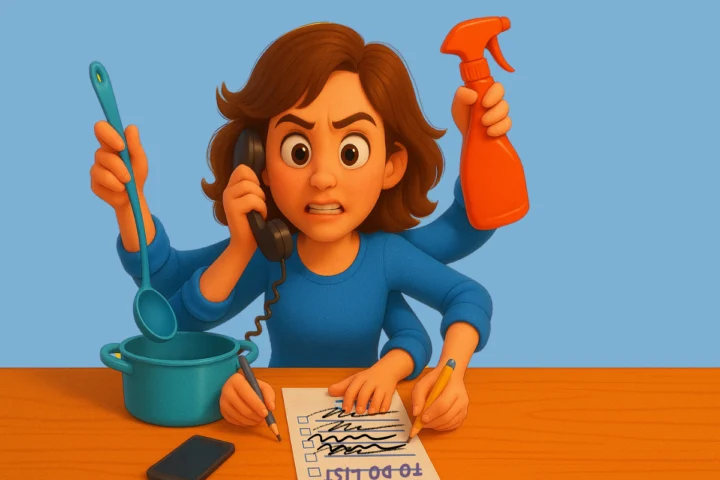
You reach the end of the day and realize you have been struggling for hours. You reread the same message several times. A small question felt unusually irritating. You wanted company, but answering a friend’s text seemed like too much.
Looking back, there were changes. In the moment, you may have explained each one away and kept going.
Noticing early signs of overwhelm starts with getting curious about changes in your own patterns. You may not catch every difficult day in advance. You can still learn which observations deserve your attention before you feel completely worn down.
Recognize early signs of overwhelm against your usual pattern
The NHS describes stress-related changes in concentration, sleep, behavior, and physical comfort. These can include difficulty making decisions, irritability, and muscle tension. [1] A general list gives you possibilities to consider. Your own context matters.
Think about a reasonably manageable week. How easily do you follow a conversation? What does your sleep usually look like? How much time alone feels comfortable? How do you respond when a small plan changes?
Choose two or three ordinary reference points. You might write: “I usually answer a friend’s message when I have a quiet moment. I can follow the steps of a familiar recipe. I enjoy some conversation after work.”
Your reference point does not have to be a symptom-free version of yourself. If you live with a health condition, disability, or ongoing stress, consider what is usual within your circumstances. Familiar distress also deserves care; being accustomed to it does not make it harmless.
Describe the change before explaining it
“I’m falling apart” tells you how serious something feels. A concrete observation can give you something clearer to discuss.
Try: “I’ve opened this message four times and still haven’t taken in what it says.” Or: “I’ve turned down two invitations I would usually enjoy, and I miss those people.”
Keep the description close to what happened. “I interrupted twice during dinner” is different from “I’m becoming an impossible person.” One describes behavior you can examine. The other adds a judgment about who you are.
You can also notice what you stopped doing: taking a lunch break, enjoying a familiar activity, or asking a question when you need clarification. Include context such as a disrupted night, illness, or an unusually demanding week. Avoid assigning a single cause before you know enough.
Look for your sequence, not a universal checklist
Imagine that you notice a familiar progression: you begin rereading simple emails, then become unusually short with people, then spend the evening unable to settle into anything. That sequence may be worth recognizing next time.
Someone else’s pattern may look different. They might become quieter, delay ordinary replies, or stop noticing when they need a break. These examples illustrate possibilities rather than diagnostic signs.
For a few days, you could make one brief note at a convenient time: what you noticed, what was happening around it, and whether anything helped. NIMH includes journaling and learning about personal stress triggers among possible coping approaches. [2]
You do not need to check yourself constantly. If recording symptoms makes you more preoccupied or distressed, set the exercise aside and discuss that response with a qualified professional. The note should serve a useful purpose in your life.
Give an early observation a modest response
Suppose you recognize the email-rereading pattern before a demanding afternoon. Ask: “What would help me take this change seriously today?”
You might protect a meal break, ask someone to repeat important information, or let a trusted person know that you are having a difficult day. NIMH recommends regular meals, sleep, enjoyable activities, and supportive connection as parts of mental health care. [3]
For example, telling your sister that you are having trouble concentrating can include a request she knows how to answer: “Could you text me the plan for tomorrow? I’m having a hard time keeping the details straight today.” She may be able to help with that even when neither of you can clear the afternoon.
Later, notice what happened without grading yourself. Did the pause help you follow the next conversation? Did the difficulty continue? An observation can guide another choice even when the first response offers little relief.
If anxiety is part of what you notice, you can explore different ways of responding to anxiety with attention to what is useful for you.
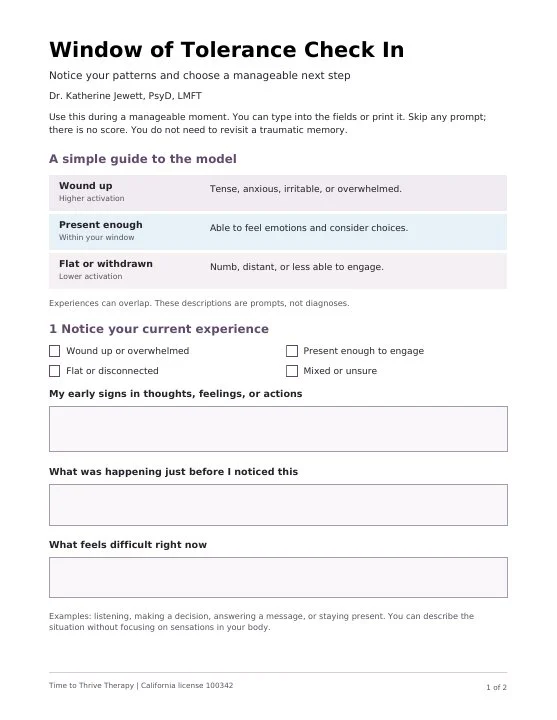
FREE FILLABLE CHECK-IN
Try a brief check in
If a page to write on would help, my Window of Tolerance Check In gives you space to note your early signs, what has become difficult, and one response you might try. You do not need to wait until you feel overwhelmed to use it.
Download the free check-in PDF
View instructions and supplies
Two pages, fillable or printable. Use a manageable everyday example, skip any prompt, and keep your completed copy private. Breathing is optional.
Leave room for other explanations
A change in sleep, concentration, or physical comfort cannot tell you its cause on its own. A personal pattern is not a diagnosis, and recognizing stress does not rule out another health concern.
Bring new, persistent, worsening, or concerning symptoms to a health professional rather than assuming they are simply overwhelm. Do not delay urgent medical attention for severe or sudden symptoms while trying a reflection exercise.
You can take a few specific observations to an appointment. “This has happened most afternoons for ten days and is interfering with work” gives useful context without requiring you to decide what is wrong.
Seek support before everything stops working
NIMH recommends professional help for severe or distressing symptoms lasting two weeks or more, including trouble with sleep, concentration, or usual activities. [3] You can ask for help sooner when you are concerned or struggling to cope. [1]
You might still be getting through work while finding every evening harder. That is something you can tell a health professional: “I’m meeting deadlines, but I’m too worn out afterward to cook or see anyone. This is different for me.” You do not have to wait until you can no longer do your job to explain what the rest of the day is costing you.
Dr. Katherine Jewett, PsyD, LMFT
California LMFT license 100342
This article offers general education, not individualized assessment or mental health care. Examples are illustrative and are not taken from client sessions.
Sources
- Source 1: Stress
- Source 2: I’m So Stressed Out! Fact Sheet
- Source 3: Caring for Your Mental Health
Related reading and resources
- Understanding Your Window of Tolerance
- When Everything Feels Like Too Much: How to Choose the Next Step
- Self-help tools and resources