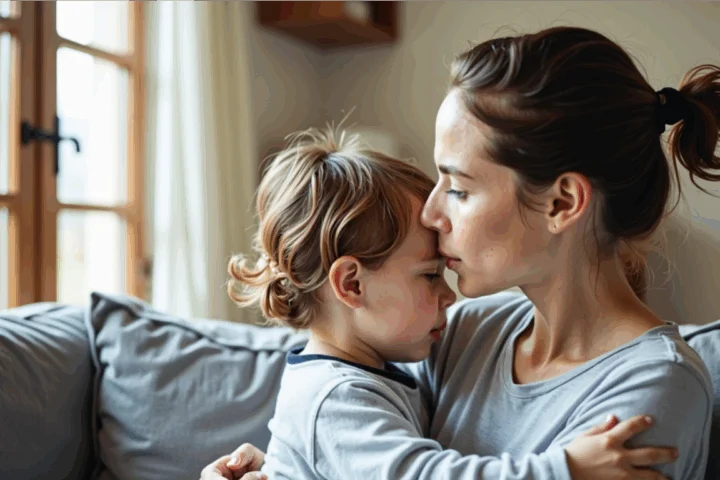
A gentle guide for when you feel overwhelmed
By Dr. Katherine Jewett, PsyD, LMFT | California license 100342
You know the conversation matters. You want to listen. Yet your shoulders are tight, your thoughts are moving quickly, and the next thing you say comes out sharper than you intended.
Or perhaps the day has simply been too much. By the time you have a quiet moment, you still feel wound up, even though there is finally nothing you need to do.
Breathing exercises for emotional regulation can offer a practical place to begin. Gentle, comfortable breathing may help ease stress and give you a little more room to decide what you need next. It will not resolve every difficult feeling or the circumstances behind it. [1, 2]
You can start with a few breaths. There is no need to complete every exercise, reach a particular count, or make yourself feel calm on command.
What emotional regulation looks like in everyday life
Emotional regulation involves noticing what you feel and having some flexibility in how you respond. You might still be angry and choose to explain what hurt. You might feel anxious and ask for help. You might recognize that you are too overwhelmed to continue a conversation thoughtfully.
A useful first question is, “What am I noticing?” Perhaps your jaw is clenched, you are rushing to defend yourself, or you have stopped taking in what the other person is saying.
A breathing practice can become a pause between noticing those signs and deciding what to do. The next step might be a conversation, a boundary, rest, or support from someone else.
How breathing may help
Relaxation practices can be accompanied by slower breathing and a reduced heart rate. For some people, comfortable breathing helps ease the physical tension that comes with stress. Responses vary, and focusing on the breath can sometimes increase anxiety. [2]
Research is encouraging without offering a guarantee. In a 2023 randomized study, adults practiced five minutes of structured breathing or mindfulness meditation daily for a month. Breathwork, especially an exhale-focused practice called cyclic sighing, showed greater improvement in positive mood and reduction in breathing rate than the meditation comparison. That finding does not mean every breathing exercise has the same effect. [3]
The options below are gentle starting practices, not a recreation of that study's protocol.
Before you begin
Choose somewhere you can pause safely. Sit or lie in a supported position, and keep your eyes open if you prefer. Save the exercises for later if you are driving.
If you become dizzy, increasingly panicky, or disconnected, stop changing your breath and let it return to its usual rhythm. Look around the room or seek support. Contact a health professional if symptoms persist. New or severe chest pain, fainting, or significant difficulty breathing needs urgent medical attention.
If you have a condition affecting your breathing, check with your healthcare professional about which practices are appropriate. [4]
Try gentle belly breathing
Belly breathing is also called diaphragmatic breathing. Your diaphragm sits beneath your lungs. As it moves, your abdomen may rise and fall. Air goes into your lungs; you are noticing the movement around them. [4]
- Settle into a comfortable position with your back supported.
- If you like, rest a hand lightly on your lower ribs or abdomen.
- Breathe in gently through your nose if comfortable. Notice any movement beneath your hand without trying to push your belly outward.
- Let the breath leave easily. Allow the next breath to arrive without deliberately holding it.
- Try a few breaths, then return to your usual breathing and check how you feel.
The movement may be small. You do not need a dramatic rise and fall or the deepest breath you can take. If resting a hand on your body feels uncomfortable, leave your hands in your lap.
Try a comfortable steady rhythm
A simple count can give your attention something to follow. The NHS suggests gentle, regular breathing with optional counting, without forcing the breath. [1]
Try breathing in for a comfortable count of three and out for three. Let the breaths flow without a hold. Use a shorter count if you need to, or leave out the numbers altogether.
After several breaths, ask, “Does this feel manageable?” If counting makes you tense or worried about getting it right, an ordinary, uncounted breath is another option.
Explore a slightly longer exhale
If a steady rhythm feels comfortable, you can experiment with letting the out-breath last a little longer. For example, breathe in for three counts and out for four.
Keep the breath easy. Avoid squeezing out the last bit of air or stretching the count until you feel short of breath. Try a few cycles, then release the counting.
Treat the numbers as a suggestion. This particular ratio is not a requirement for calming down, and it may not suit you. An even rhythm is fine too.
When breathing makes you feel more anxious
Some people find that turning their attention inward makes uncomfortable sensations more noticeable. This can be especially unsettling after trauma. The National Center for PTSD notes that relaxation may initially increase distress for some people and suggests ways to remain connected with the outside world. [5]
If that happens, you can stop the breathing exercise. Try looking around and describing an ordinary object, listening to familiar music, or taking a short walk if it is safe and comfortable. You can also contact someone whose company feels supportive.
If these practices repeatedly leave you feeling panicky, unreal, or disconnected, bring that experience to a qualified therapist. Understanding your response is more useful than pushing yourself through an exercise that makes things harder.
Use a pause during a difficult conversation
Imagine noticing that you are preparing your next defense instead of listening to your partner. A brief pause can give you time to consider how you want to respond.
You might say:
“I want to understand you, and I'm having trouble taking this in. Can we take a break and come back to it at 7:30?”
During the break, try a few comfortable breaths, walk for a little while, or sit somewhere quieter. Agree on a realistic time to return, and follow through or communicate if you need to adjust it.
When you come back, the concern still needs attention. You might begin with, “What I heard you saying was…” or “I can see that my response hurt you.”
This approach assumes the conversation is safe. If there are threats, intimidation, or violence, prioritize safety and individual support.
Make the practice small enough to use
Choose an ordinary moment: after brushing your teeth, before opening your inbox, or when you sit down at the end of the day. Start briefly. If the exercise feels comfortable, you can gradually spend a few minutes with it. Regular practice is part of the NHS guidance for stress-related breathing exercises. [1]
Afterward, ask yourself two questions: “How do I feel now?” and “What do I need next?” You may need food, sleep, practical help, or a conversation you have been avoiding. A breathing practice can help you pause long enough to notice those needs.
If you forget a day, begin again when you remember. There is no lost progress to make up.
Common questions about breathing exercises
How long should I practice
Begin with a few comfortable breaths. If that feels useful, gradually try a longer practice. There is no minimum duration you need to reach.
Do I need to hold my breath
None of the practices here requires a breath hold. Let one breath flow into the next at a comfortable pace.
What if I still feel upset afterward
The situation may still need attention, and you may need more support. You can ask for help even when a coping exercise has made things a little easier.
Can breathing exercises replace therapy
Breathing can be one coping tool alongside other care. Persistent anxiety, trauma symptoms, or distress that interferes with daily life deserves professional attention. [2]
Support for anxiety and overwhelm
If you are spending much of your day feeling on edge, overwhelmed, or caught in difficult relationship patterns, we can look together at what is happening and what might help. You do not need to have a clear explanation before reaching out.
I offer therapy for anxiety and couples counseling in Pleasant Hill, California, and online therapy for clients located in California.
You can schedule a free 30-minute consultation to talk about what you are experiencing, ask questions, and see whether working together feels like a good fit.
For now, choose one manageable next step. That might be trying a gentle breath. It might be setting the exercise aside and asking someone to listen.
Dr. Katherine Jewett, PsyD, LMFT
This article provides general education and does not replace individualized medical or mental health care.
Sources and further reading
[1] NHS. Breathing exercises for stress.
[2] National Center for Complementary and Integrative Health. Relaxation techniques and what you need to know.
[3] Balban, M. Y., et al. (2023). Brief structured respiration practices enhance mood and reduce physiological arousal. Cell Reports Medicine, 4(1), 100895. doi:10.1016/j.xcrm.2022.100895.
[4] Cleveland Clinic. Diaphragmatic breathing.
[5] U.S. Department of Veterans Affairs, National Center for PTSD. Coping with traumatic stress reactions.
Related reading and resources
- Why Do Breathing Exercises Make Me More Anxious?
- Understanding Your Window of Tolerance
- Self-help tools and resources